

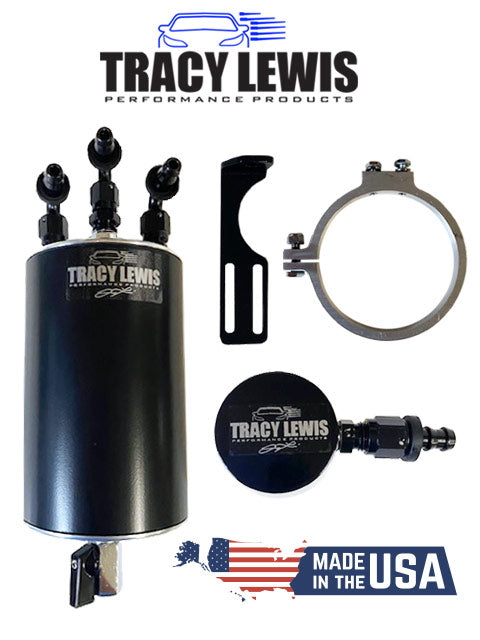
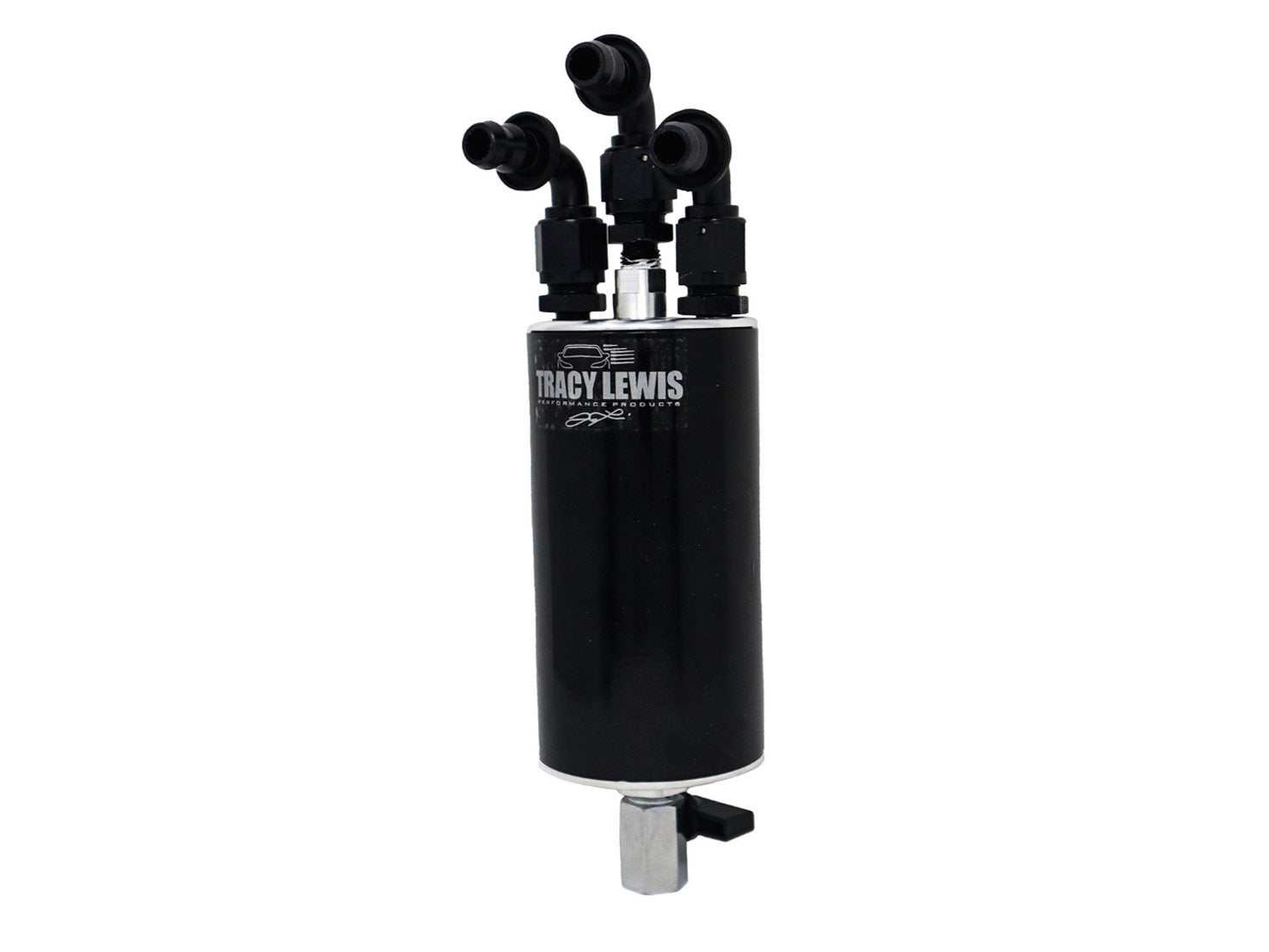
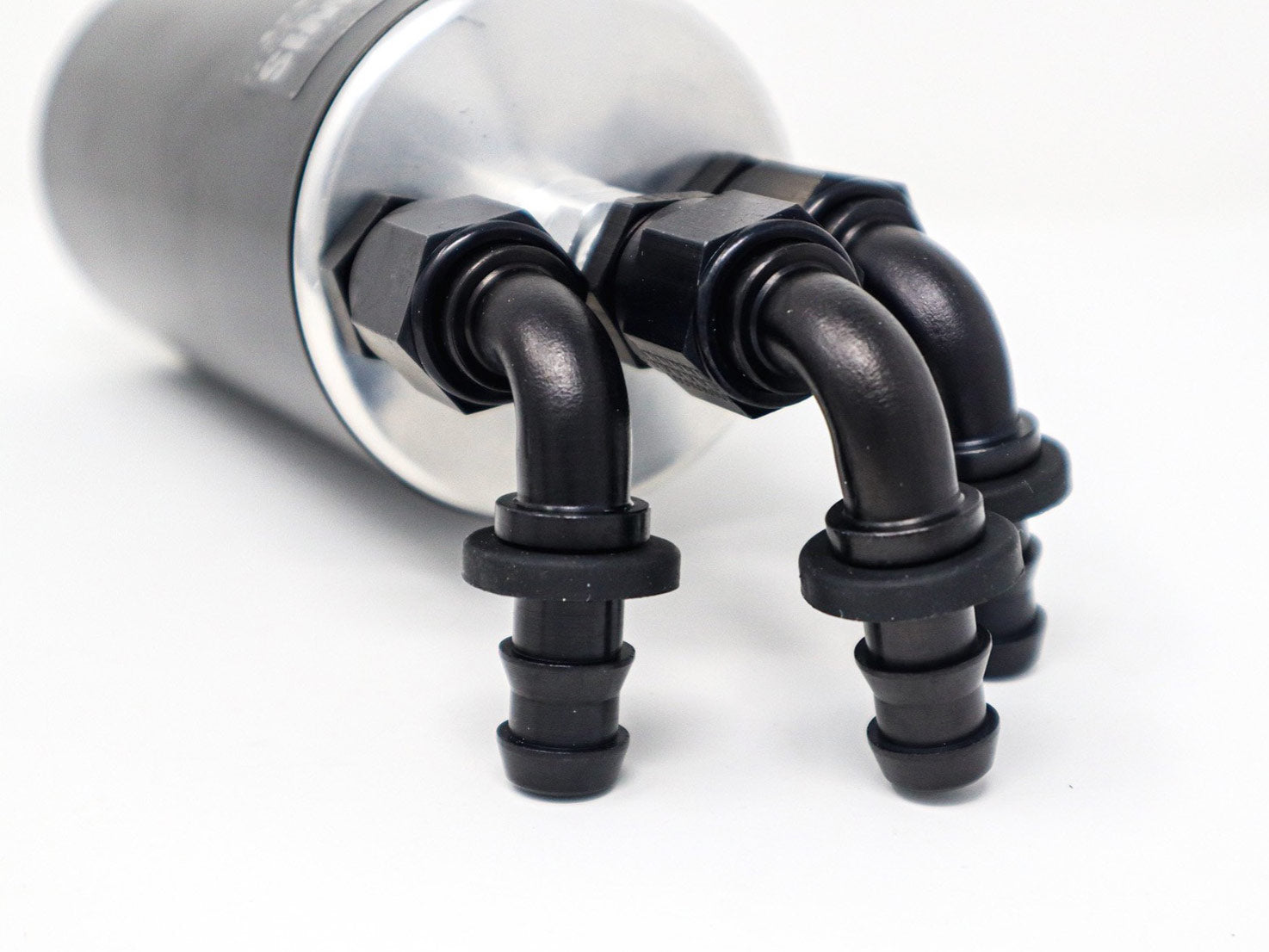
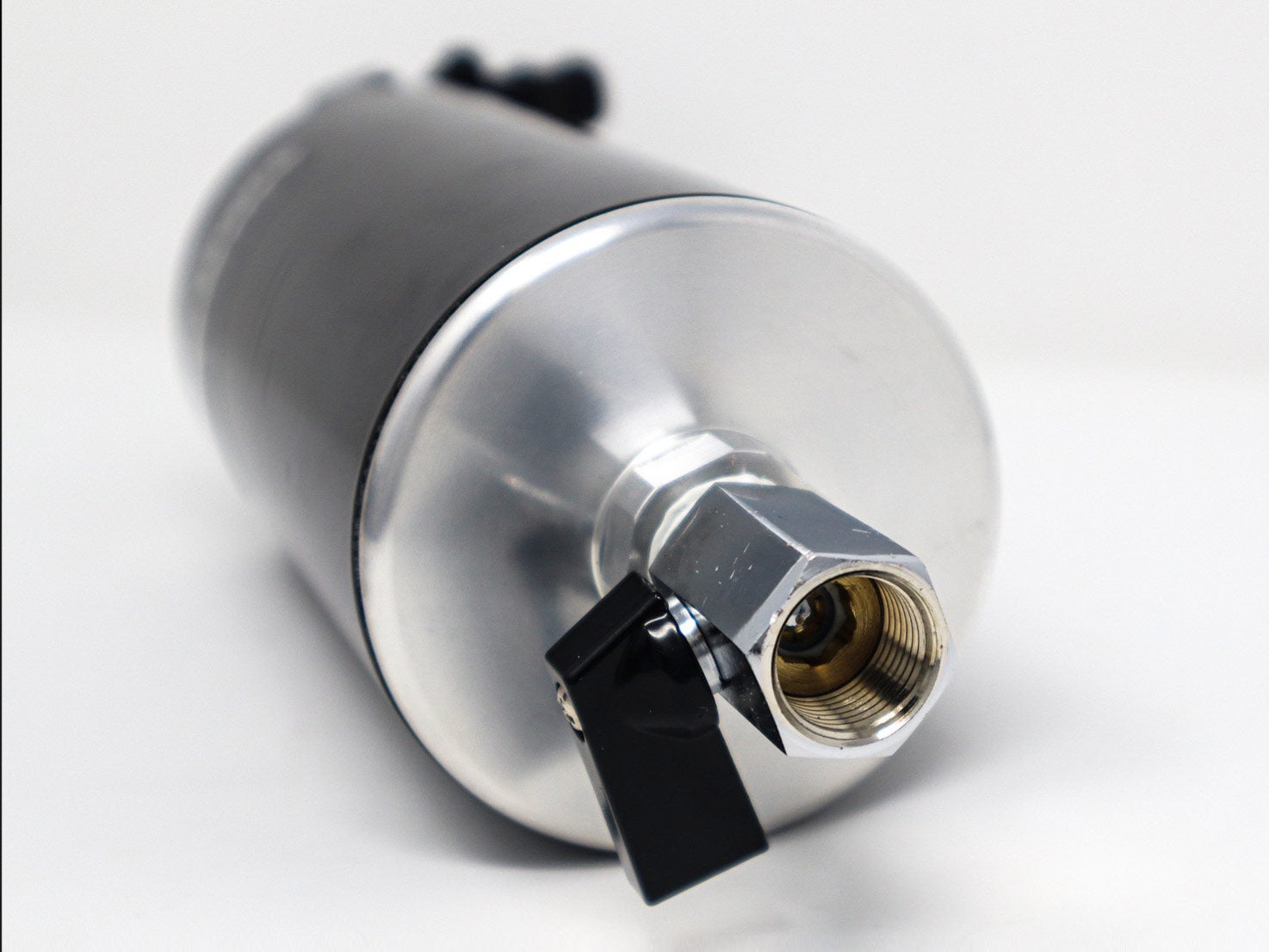
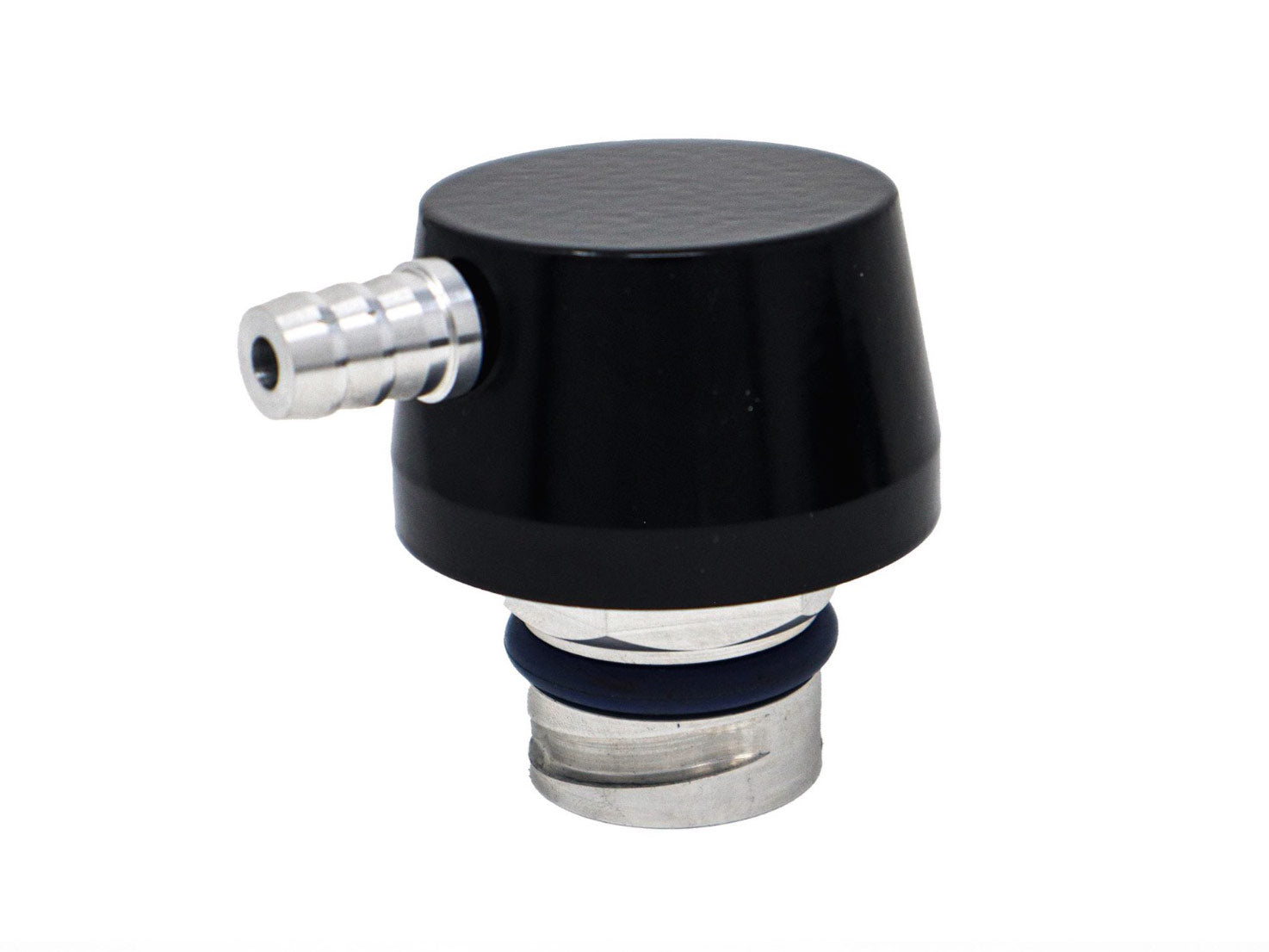
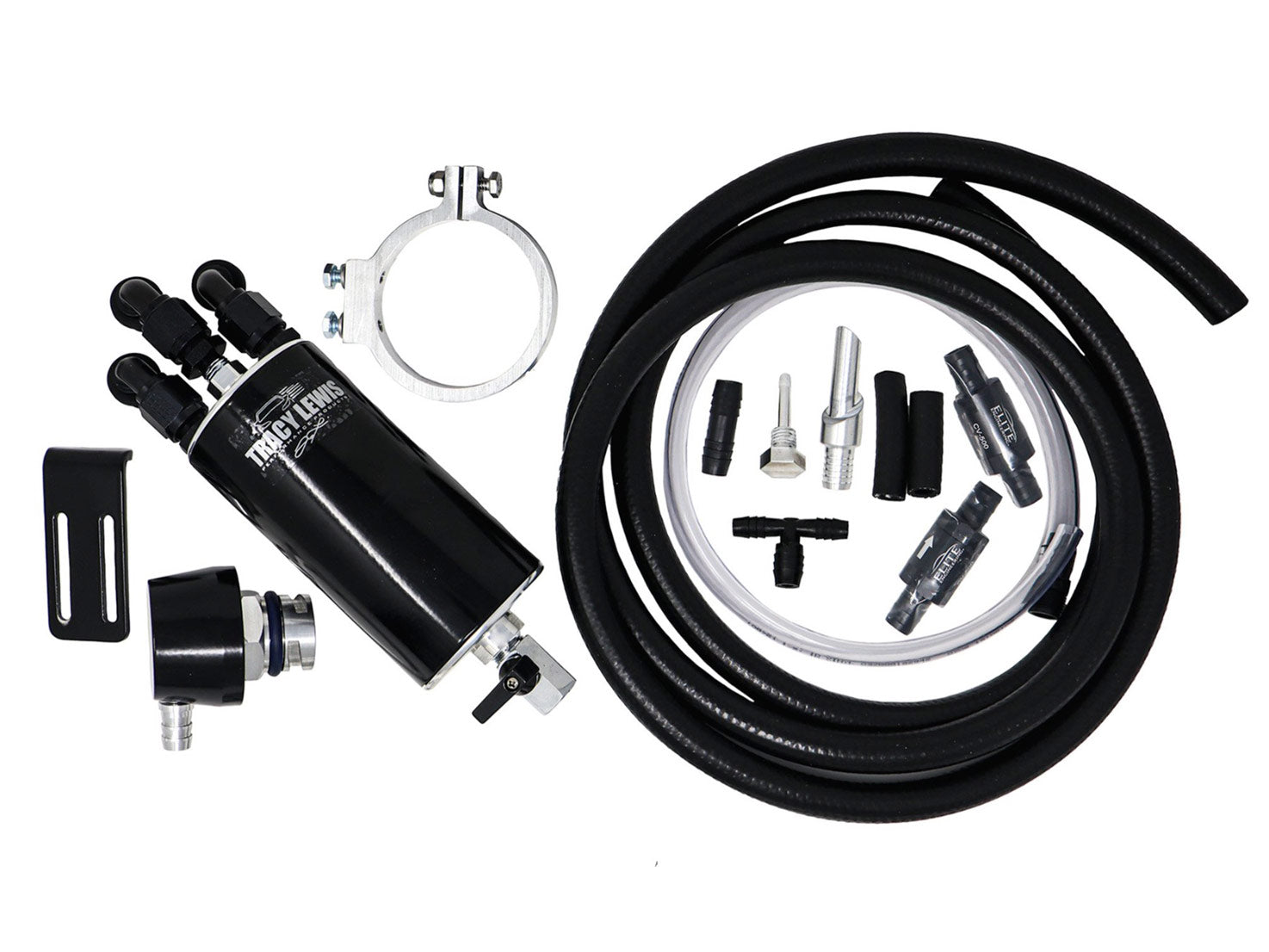
Tracy Lewis Catch Can Fleet Edition
Tracy Lewis Catch Can Fleet Edition is backordered and will ship as soon as it is back in stock.
The automotive industry's move to GDI (Gasoline Direct Injection) from the port injection most of us were accustomed to — which would routinely last 200k plus miles with minimal care — has brought a set of engine and internal parts failures that were far less common before. Light fleets running trucks, vans, taxis and municipal vehicles have felt it hardest, both in operating cost and in the ability to budget predictably against past experience.
Unplanned downtime, and the loss of the service life fleets had come to expect, has made this a difficult category to plan around. The underlying issues:
- GDI engines push substantially more raw fuel past the piston rings than the port injection engines they replaced — commonly cited at eight to twelve times the amount. That fuel washes oil from the cylinder walls and dilutes the already thin viscosities most manufacturers specify, in some cases within the first 1,000 miles. It also drives oil consumption, because heavily diluted oil is pulled into the combustion chamber and burned. Because the oil level can actually rise as fuel accumulates, many people maintaining these vehicles do not realise how far it has gone until the engine fails.
- With no detergent fuel spraying onto the backs of the intake valves to keep them cool and clean, coking deposits bake into a hard crystalline form that is abrasive as sand. As those deposits shed, most is expelled out the exhaust, but smaller particles get forced between the pistons and cylinder wall and find their way into the crankcase. Most are finer than an oil filter will trap, so they circulate and add to wear.
- Between the fuel dilution and the contamination, oil can reach a condemned state far sooner than the service interval suggests — in some cases within 1,000 to 3,000 miles. Left in the engine past that point, failure is not far behind.
- Fuel economy degrades as a consequence. Thinned oil drawn into the combustion chamber contaminates the air/fuel mixture and causes knock. The ECU detects the knock and pulls timing to protect the pistons, and the engine then runs with less efficiency and less power.
The industry response has largely been to manage exposure rather than the cause. Warranty terms on these engines have tightened, and GDI-related deposit and dilution complaints have been the subject of class action litigation against a number of manufacturers. For the average light fleet owner, none of that helps much.
What the Tracy Lewis system does
The Tracy Lewis Catch Can addresses the cause rather than the symptom, providing full-time vacuum-based evacuation of these substances before they have a chance to settle, mix and accumulate in the crankcase. It does so while retaining a closed system that reduces tailpipe emissions by removing contaminants before the combustion process, scrubbing the vapours and containing them separately for proper disposal.
What fleets running the system report
The figures below come from fleet operators running our systems and from our own testing. Results vary with the vehicle, its duty cycle, and the condition of the engine when the system was fitted — which is exactly why we offer the trial programme below rather than asking you to take these on trust.
- Oil service life. Oil has stayed clean and in comparable condition two to three times as long, so drain intervals can be extended where regular oil analysis is used to monitor.
- Intake valve coking. Where the system is fitted new or nearly new, operators have reported up to 85% of the deposits that would otherwise form being prevented. Fitting to an engine that has already coked will not undo existing deposits.
- Fuel economy. With most oil-vapour-induced knock retard eliminated, fleets have typically reported gains around 10%, and in some cases 12 to 14%.
- Downtime and wear. Operators report downtime returning toward the levels they were used to on port injection engines, with measurably reduced wear.
- Return on investment. Depending on miles driven, fleets have reported reaching ROI in roughly four to eight months, with the saving continuing from there.
Prove it on your own fleet
Fleet owners and managers running at least 50 vehicles who already track their costs, including fuel usage, can request a complete system at no cost to test and validate against their own numbers. We will train your techs on everything involved. If the figures above hold on your vehicles, you will have measured it yourself rather than taken our word for it.
Call (941) 981-3930 to arrange a fleet trial.
FAQ
Why do GDI engines cause problems for light fleets?
GDI engines push substantially more raw fuel past the piston rings than the port injection engines they replaced, commonly cited at eight to twelve times the amount. That washes oil from the cylinder walls and dilutes it, in some cases within the first 1,000 miles, which drives engine failures, oil consumption and unplanned downtime.
Why does intake valve coking matter on a fleet vehicle?
GDI engines have no detergent fuel spraying onto the backs of the intake valves, so coking deposits bake into a hard crystalline form that is abrasive as sand. As deposits shed, smaller particles are forced between the pistons and cylinder wall and reach the crankcase, adding to wear. Most are finer than an oil filter will trap.
How quickly can oil reach a condemned state?
In some cases within 1,000 to 3,000 miles, far sooner than the service interval suggests. Left in the engine past that point, failure is not far behind.
How does the Tracy Lewis system address this?
It provides full-time vacuum-based evacuation of these substances before they can settle, mix and accumulate in the crankcase, while retaining a closed system. It scrubs the vapours and contains the contaminants separately for proper disposal, and reduces tailpipe emissions by removing them before the combustion process.
How much longer does the oil last?
Fleets running the system report oil staying clean and in comparable condition two to three times as long, allowing drain intervals to be extended where regular oil analysis is used to monitor. Results vary with vehicle and duty cycle.
How much valve coking can be prevented?
Where the system is fitted when the vehicle is new or nearly new, operators have reported up to 85% of the deposits that would otherwise form being prevented. Fitting it to an engine that has already coked will not remove existing deposits.
What fuel economy gain can a fleet expect?
With most oil-vapour-induced knock retard eliminated, fleets have typically reported gains around 10%, and in some cases 12 to 14%. This varies with the vehicle, its duty cycle and its condition when the system was fitted.
Can we trial the system before committing?
Yes. Fleet owners and managers running at least 50 vehicles who already track their costs, including fuel usage, can request a complete system at no cost to test and validate against their own numbers. We will also train your techs on everything involved.
What is the typical return on investment?
Depending on miles driven, fleets have reported reaching ROI in roughly four to eight months, with the saving continuing from that point.

